
Jatiluwih: The Most Beautiful Rice Terraces in Bali
By Gadink · 11 September 2026
A UNESCO World Heritage landscape of endless green steps. Why Jatiluwih beats the crowded spots.
Jatiluwih: The Most Beautiful Rice Terraces in Bali
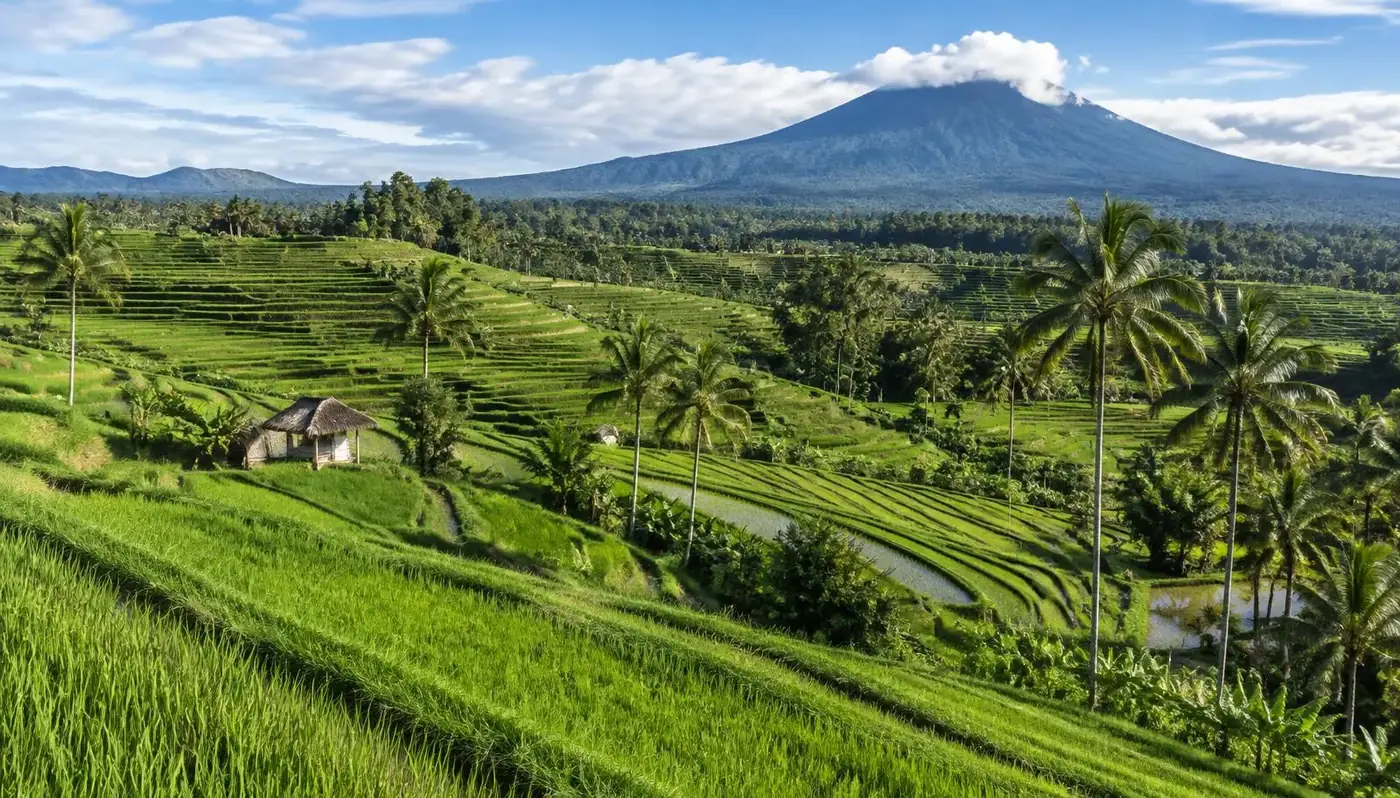
Tegalalang might be the name you hear first, but Jatiluwih is the place that makes you stop mid-conversation and simply look. Across the southern slopes of the Batukaru mountain range, rice terraces ripple through the landscape in sweeping curves. Coconut palms punctuate the fields, irrigation channels chatter beside the paths, and the mountains give everything a wonderfully dramatic backdrop.
Calling anywhere Bali’s most beautiful is always a matter of opinion. Even so, Jatiluwih makes a persuasive case. Its appeal is not just one photogenic viewpoint: it is the scale of the landscape and the chance to spend time inside it, walking between fields that are still actively farmed.
This is a brilliant day out if you enjoy scenery, gentle exploring and discovering something of everyday Balinese life. You can keep things relaxed with a short walk and lunch, or make the terraces the centrepiece of a longer countryside adventure.
With Exciting Bali Tour, you can discuss a private-driver trip to Jatiluwih Rice Terraces and build the day around your interests. The best approach is simple: leave enough time to enjoy the place, rather than treating it as another quick photograph stop.
Why Jatiluwih is so special
Jatiluwih is part of the Cultural Landscape of Bali Province UNESCO World Heritage property, recognised for its subak system. Subak is much more than a network of irrigation channels. It is a traditional system through which farming communities organise water distribution, with religious practices and cooperative decision-making closely connected to agricultural life.
This tradition has developed over roughly a thousand years. It reflects the Balinese philosophy of Tri Hita Karana, often described as harmony between people, the natural world and the spiritual realm. At Jatiluwih, those ideas are not confined to a museum display: they are embedded in a working landscape.
As you walk, look for the small channels carrying water between terraces and the shrines associated with the fields. The landscape’s beauty depends on continuing care, shared resources and the hard work of farmers. Understanding that makes the view far more interesting than a pretty pattern of green steps.
Jatiluwih is not a deserted secret, and popular viewpoints can be busy. However, the broad landscape offers more room to spread out than some smaller terrace attractions. Walking beyond the first stopping point often brings a quieter experience.
If this connection between farming and faith interests you, our guide to Bali’s temples and their cultural significance is a useful companion when planning your visit.
Walking the terraces at your own pace
The most rewarding way to experience Jatiluwih is on foot. Walking routes lead through different parts of the rice-growing landscape, with options for shorter outings and longer explorations. Check the current route information when you arrive, as access and path conditions can change with weather and farming activity.
For a relaxed visit, allow roughly 45 minutes to an hour for a short walk with frequent stops. If you enjoy walking and photography, give yourself a couple of hours or more. These are planning allowances, not fixed trail times: your route, pace and the conditions will determine how long you need.
Expect a mixture of surfaced sections, narrower paths, gradients and potentially slippery ground. Jatiluwih is not one entirely flat, uniformly accessible attraction. Anyone travelling with a pushchair or with limited mobility should discuss suitable viewpoints and walking options before setting off.
Wear shoes with a dependable grip rather than smooth-soled sandals. Bring drinking water, sun protection and a lightweight waterproof layer. A small day bag is more comfortable than carrying lots of loose belongings, especially when the path narrows.
Along the way, you may spot ducks moving through the paddies, dragonflies hovering above the water or farmers tending their crops. None of these encounters is guaranteed, and that is part of the pleasure: this is real countryside, not a scheduled performance.
Stay on designated paths and avoid stepping onto planted terraces for photographs. A field edge that looks like a convenient shortcut may be fragile, muddy or important to irrigation.
The best time to visit Jatiluwih
Morning is often a lovely time to arrive. The air can feel fresher, the light is usually softer than at midday, and an earlier start gives you more flexibility if clouds or showers develop later. It also leaves time for lunch without rushing your walk.
There is no single month when every terrace is guaranteed to be bright green. Rice fields change through planting, growing and harvesting, and neighbouring plots may be at different stages. You might see reflective water, young green shoots, dense mature plants, golden rice or recently harvested fields during the same visit.
If lush green scenery is your priority, ask about recent conditions before travelling. Rice generally turns golden as it ripens towards harvest, so “just before harvest” does not necessarily mean the greenest landscape.
Bali’s wetter months are generally November to March, while the drier period usually falls between April and October. These are broad seasonal patterns, not promises. Mountain weather can change quickly throughout the year.
Clouds need not spoil the experience. Mist drifting around the slopes can be beautiful, although heavy rain may make a long walk less appealing. Keep your schedule flexible enough to swap a walk and lunch around if necessary.
Getting there without turning the day into a marathon
Jatiluwih lies in Tabanan Regency, inland from Bali’s southern beach areas. The approach takes you through villages and increasingly rural scenery, with winding roads as you get closer. The drive is part of the day, but distances on a map can underestimate the time involved.
From Ubud, a journey of around one and a half to two hours is a reasonable starting estimate. From Seminyak or Canggu, allow roughly two hours or more, depending on your exact location, departure time and traffic. These are approximate planning ranges, not guaranteed transfer times.
If you are staying inland, discuss your pick-up through the Ubud private-driver page. Travellers on the coast can explore the options for a private driver from Seminyak or a day trip starting in Canggu. Your actual accommodation location matters, particularly where local roads become congested.
A private driver is useful here because you can agree on walking time, lunch and realistic extra stops without having to organise separate transport after each activity. Confirm the itinerary, expected duration and what is included before booking.
Entrance charges, parking arrangements and other local requirements can change. Check the current details rather than relying on an old screenshot or blog comment. Carry some Indonesian rupiah for small purchases and places where card payments may not be available.
Enjoying a working landscape responsibly
Jatiluwih’s terraces are somebody’s workplace and livelihood. Give farmers space, do not obstruct narrow paths, and ask permission before taking close-up photographs of people. A friendly greeting goes much further than treating everyone you meet as part of the scenery.
Avoid touching irrigation controls, moving barriers or entering areas that have been closed off. Water management is central to this landscape, and even a small interference can affect somebody else’s field. Take your litter away and use refill opportunities where available.
Comfortable, lightweight clothing is sensible for walking, with protection from the sun even on cloudy days. If your itinerary includes a temple, bring clothing suitable for covering shoulders and knees, and follow any sarong or sash requirements at the entrance. Observe signs around sacred areas and local ceremonies.
Drones deserve particular care. Do not assume that an open landscape automatically means unrestricted flying. Check current rules and local permissions, and avoid disturbing people, ceremonies or wildlife.
For lunch, choose somewhere that suits your appetite and timing rather than chasing the busiest terrace-facing table. A relaxed meal after your walk is often more enjoyable than squeezing in another distant stop. Our practical tips for a first visit to Bali offer more useful preparation for days like this.
What to combine with Jatiluwih
Jatiluwih pairs naturally with the cooler inland landscapes around Bedugul. Ulun Danu Beratan, the temple complex beside Lake Beratan, is a popular choice for a contrasting stop: rice terraces first, then lakeside scenery and temple architecture. Its appearance changes with water levels and weather, so do not expect every visit to match the same photograph.
A market stop around Candikuning can add colour and a chance to browse local produce. Market activity varies, and it is worth keeping expectations grounded: this is a place to explore what is available that day, not a guaranteed line-up of particular stalls or products.
The twin lakes, Buyan and Tamblingan, offer another mountain setting. However, adding them to Jatiluwih, Ulun Danu Beratan and a market creates a fuller day with more driving. Choose your priorities rather than assuming every nearby-looking place belongs on the same itinerary.
Munduk is worth considering if you are moving towards north Bali or staying overnight in the mountains. Browse the Munduk area guide when thinking about a longer countryside route.
Pura Luhur Batukaru is another possible cultural addition, subject to current visitor access and temple requirements. It is an active place of worship, so the visit should fit respectfully around local religious activity. Discuss the route before deciding which combination makes sense.
A realistic itinerary, with room to breathe
For a straightforward Jatiluwih day, leave your accommodation early enough to avoid making the entire morning about traffic. Travel directly to the terraces, take time to understand the walking options, and choose a route that suits your group rather than automatically selecting the longest one.
After your walk, have lunch and decide whether you still want another stop. One well-chosen addition can round out the day beautifully. Leaving room for a viewpoint, a rain shower or a longer meal is usually wiser than filling every hour in advance.
Families may prefer a shorter walk followed by an unhurried meal. Keen photographers might prioritise morning light and spend longer exploring different angles. If you want substantial walking, make Jatiluwih the main event rather than one of several major attractions.
Trying to combine Jatiluwih with a full Ubud sightseeing itinerary can mean sacrificing the time that makes both places enjoyable. They often work better on separate days, especially when starting from the coast.
For a holiday covering several regions, use the Bali highlight tour as a starting point for discussing how the rice terraces could fit into a broader journey.
Message Gadink to plan your Jatiluwih adventure
The best Jatiluwih trip is not necessarily the one with the most stops. It is the one that gives you time to walk, enjoy the mountain air and appreciate the farming landscape without watching the clock.
Gadink is the friendly local driver behind Exciting Bali Tour. You can get to know Gadink before discussing a private-driver day that suits your holiday.
Message Gadink on WhatsApp using the contact option on the Exciting Bali Tour website. Share your travel date, accommodation area, group size and how much walking you would enjoy. Mention any mobility needs, children travelling with you, or particular places you hope to combine with the terraces.
Ask about the proposed route, journey times, current charges and what is included before confirming. Then look forward to a day of wide-open views, winding countryside roads and a closer look at one of Bali’s most remarkable living landscapes.