
7 Bali Temples You Must See at Least Once
By Gadink · 31 July 2026
From temples floating on lakes to gates in the clouds — the most beautiful temples in Bali and how to visit them respectfully.
7 Bali Temples You Must See at Least Once
Bali’s temples are much more than beautiful places to take photographs. They are living centres of worship, woven into village life, family traditions and the island’s distinctive Hindu culture. Visit thoughtfully and you will discover incense drifting through courtyards, carefully arranged offerings and landscapes that make you stop mid-sentence.
These seven temples offer wonderfully different experiences: ocean sunsets, mountain air, sacred springs and royal gardens. You do not need to squeeze them into one exhausting itinerary. In fact, you will enjoy them far more by choosing a few that fit your interests and exploring nearby places along the way.
With Exciting Bali Tour, you can plan your temple visits with Gadink, a friendly local driver, rather than trying to navigate unfamiliar roads yourself. Here is what makes each temple special, what to expect and how to build a rewarding day around it.
1. Tanah Lot: Bali’s unforgettable sea temple
Few places capture Bali’s coastal drama quite like Tanah Lot. Its shrine stands on a rocky outcrop off the south-west coast, surrounded by waves when the tide rises. As the light softens, the temple becomes a striking silhouette against the sea.
Sunset is the famous moment, but it is also a popular one. Arrive with time to explore the coastal viewpoints rather than rushing straight towards the busiest spot. Earlier visits can feel less hectic, although visitor numbers vary throughout the year.
The tide changes the experience considerably. At lower tide, visitors may be able to approach the base of the rock when access is permitted, but the main shrine is not generally open to tourists. Follow local instructions, watch your footing and never assume an exposed stretch of rock is safe from incoming waves.
For a relaxed afternoon, combine Tanah Lot with lunch and another stop in the surrounding area. It can pair well with Taman Ayun, depending on your starting point and traffic. If you are staying around the south-west coast, planning a private-driver visit to Tanah Lot helps you think through the journey as well as the sunset itself. Leave breathing room afterwards: departures can be slow when everyone heads home together.
2. Ulun Danu Beratan: a lakeside temple in the highlands
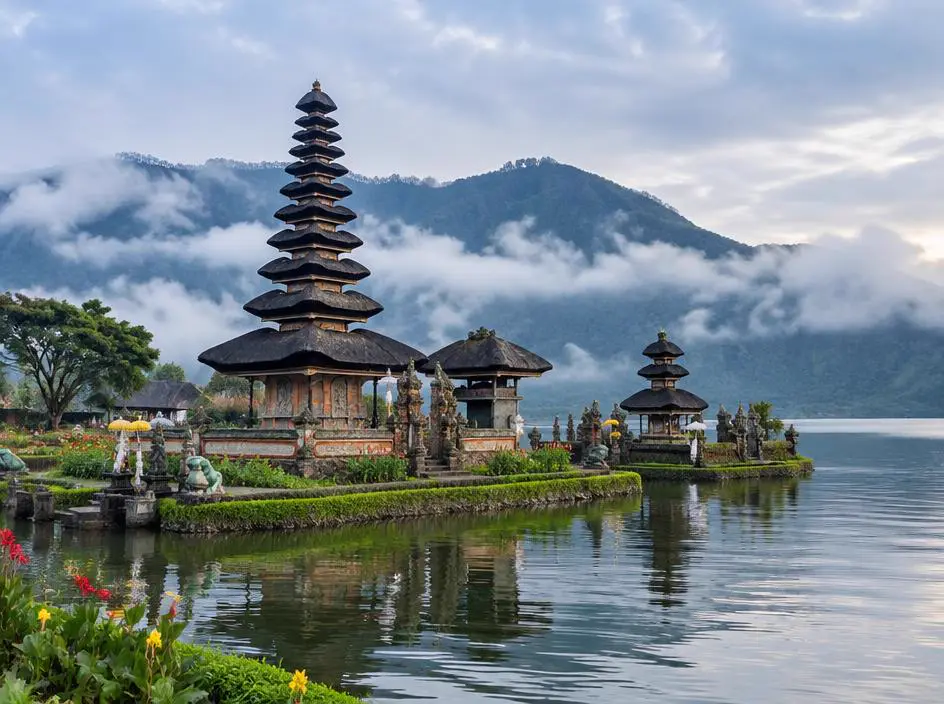
Ulun Danu Beratan feels completely different from Bali’s coastal temples. Set beside Lake Beratan in the Bedugul highlands, its tiered shrines are backed by mountain scenery, with cooler air and occasional mist adding to the atmosphere.
The famous “floating temple” appearance depends on lake levels and your viewpoint. Sometimes water surrounds the small shrine islands; at other times, more of the shoreline is visible. Either way, the combination of temple architecture, gardens and lake makes this a memorable stop.
Come prepared for changeable weather. A light layer and a compact rain jacket are useful even when you leave your hotel under blue skies. Mountain cloud can roll in quickly, and clear views are never guaranteed. Comfortable shoes make wandering the grounds more enjoyable, especially after rain.
This is a good temple for travellers who prefer a gentler sightseeing pace, although it remains a popular attraction. Take time to look beyond the best-known photograph and appreciate the wider setting.
Rather than driving into the highlands for a single stop, consider a route that includes other nearby sights. If you are continuing towards Munduk with a private driver, discuss the full journey beforehand. Mountain roads are winding, and a route that looks short on a map can take longer than expected.
3. Lempuyang: more than the Gates of Heaven photograph
Lempuyang is best known for its split gateway, which can frame Mount Agung when the weather is clear. It is an extraordinary view, but the photograph tells only a small part of the story.
The famous gate is at Pura Penataran Agung Lempuyang, part of a larger sacred temple complex in East Bali. Visiting this courtyard is not the same as completing the longer, more demanding pilgrimage route to temples higher on the mountain.
It is also worth knowing that the familiar reflection photograph usually uses a mirror held beneath the camera. There is no permanent reflecting pool in front of the gate. Enjoy the picture if it appeals to you, but arrive with realistic expectations.
Go early if possible, while remembering that an early arrival does not guarantee a short queue or an unobstructed mountain view. Cloud, ceremonies and visitor numbers all affect the experience. Local transport arrangements and access procedures can change, so check these before travelling.
A private-driver trip to Lempuyang Temple is particularly useful for planning the long journey from southern Bali. Pairing it with Tirta Gangga can make sense, but resist adding too many distant stops. For more inspiration, explore these East Bali highlights and quieter discoveries and choose a route that leaves time to enjoy the scenery.
4. Uluwatu: clifftop scenery and an evening Kecak performance
Uluwatu Temple sits high above the Indian Ocean on Bali’s Bukit Peninsula. The setting is spectacular: steep limestone cliffs, breaking waves far below and coastal paths with wide-open views.
The temple is a sacred place first, and access to its inner worship areas is restricted. Most visitors come to appreciate the surrounding grounds and cliffside setting. Stay behind barriers, supervise children closely and avoid stepping towards exposed edges for photographs.
Then there are the monkeys. They are part of the experience, but they can snatch glasses, hats, phones and loose belongings. Keep valuables secure, do not feed or provoke them, and ask staff for help rather than trying to wrestle something back.
Many travellers combine their visit with the nearby evening Kecak performance. The rhythmic chanting and scenes from the Ramayana create a memorable setting as daylight fades. The performance is a separate attraction, so check current schedules, ticket arrangements and availability instead of assuming it is included with temple entry.
Our guide to Uluwatu sunset and the Kecak fire dance can help you plan the combination. Allow a generous traffic buffer, particularly when travelling from Canggu, Seminyak or Ubud. A beach stop or leisurely lunch nearby usually works better than crossing the island immediately before the show.
5. Tirta Empul: sacred springs and respectful participation
Near Tampaksiring, Tirta Empul is known for its sacred spring water and purification pools. Water flows through a series of spouts, and Balinese Hindu worshippers come here for melukat, a ritual associated with spiritual cleansing.
Watching respectfully can be meaningful in itself. You do not have to enter the water to appreciate the temple, and choosing not to participate is entirely fine.
Visitors may be permitted to take part under local guidance, but this should never be treated as a swimming stop or a photo opportunity. Ask about the correct procedure, clothing and which spouts are appropriate to use. Some have specific ritual purposes and should not simply be followed in sequence without explanation.
If you intend to participate, bring a change of clothes and a towel, and check the arrangements for suitable bathing attire, lockers and changing facilities on arrival. Do not assume the sarong used for walking around the temple is suitable for entering the pools. Avoid swallowing the water and consider your own health needs before joining.
Tirta Empul fits naturally into an Ubud-area day, perhaps alongside countryside views or another cultural stop. Our Ubud day-trip guide with a private driver offers ideas for building a balanced itinerary. Keep the schedule flexible enough to pause rather than feeling hurried through a sacred space.
6. Besakih: Bali’s Mother Temple on Mount Agung
Besakih is often called Bali’s Mother Temple, and its mountain setting gives the name real weight. Spread across the slopes of Mount Agung, this extensive complex brings together numerous temples, courtyards, gateways and tiered shrines.
Unlike a quick roadside stop, Besakih rewards time and attention. The scale can be difficult to understand at first, and a local temple guide can help explain what you are seeing and which areas visitors may enter. Check current admission arrangements and what they include, and agree on any optional services before accepting them.
Expect steps, sloping paths and an uphill walk. Comfortable footwear, drinking water and protection from both sun and rain are sensible essentials. If anyone in your group has limited mobility, discuss access needs before setting off rather than assuming every part of the complex will be manageable.
Ceremonies can make a visit especially atmospheric, but they can also change access and create busy periods. Give worshippers priority and never step into a procession or restricted courtyard for a better photograph.
Besakih works best as the main focus of an eastern or central Bali outing. Add one or two sensible stops rather than attempting to combine it with distant coastal attractions. The approach through villages and green hills is part of the experience, not simply a transfer to rush through.
7. Taman Ayun: royal heritage and elegant gardens
Taman Ayun, in Mengwi, offers a different kind of temple experience. Associated with the former Mengwi kingdom, it is known for its landscaped grounds, surrounding moat and rows of elegant, multi-tiered meru shrines.
There is a pleasing sense of order here after the intensity of Bali’s busier roads. Walk slowly, notice the carved gateways and look at how the shrines rise above the compound walls. The appeal is in the whole composition rather than one dramatic viewpoint.
Visitors generally view the sacred inner compound from outside its boundaries. That separation is part of visiting respectfully, not a reason to feel you are missing the temple. You can still appreciate its architecture and setting without entering worship areas.
Taman Ayun is often a useful choice for travellers interested in history, gardens and traditional design. It can provide a calmer-feeling contrast to a sunset crowd, although quiet conditions are never guaranteed. Bring sun protection, as parts of the grounds are exposed.
Geographically, it can combine well with Tanah Lot on a carefully paced afternoon. Allow time for each visit and a proper break instead of treating the first temple as something to tick off before the main event. Two temples enjoyed properly are usually more rewarding than five seen through a windscreen.
Temple etiquette: small gestures that make a big difference
Wear clothing that covers your shoulders and use a sarong and sash where required. These may be available at the entrance, but arrangements differ, so check rather than relying on them. Sacred-site rules also apply when your main reason for visiting is the view.
Speak quietly, avoid blocking worshippers and ask before photographing people closely. Watch for offerings on the ground and do not step over or disturb them unnecessarily. Never climb shrines, pose disrespectfully or enter a closed courtyard.
Many Balinese temples prohibit entry during menstruation, and other restrictions may apply. Follow posted guidance and ask discreetly if you are unsure. During ceremonies, access can change without much notice.
Gadink is happy to help explain local customs along the way, while priests and temple staff should guide questions about rituals and sacred access. A private driver is not automatically a temple guide. For wider preparation, these practical tips for a first trip to Bali are a useful starting point.
Message Gadink on WhatsApp to plan your temple trip
The best temple itinerary is not the longest one. It is the one that suits your hotel location, interests, energy levels and the time you have available.
Message Gadink on WhatsApp through Exciting Bali Tour and share your travel date, accommodation area, group size and favourite temples from this list. Mention children, mobility needs or whether a sunset visit, cultural explanation or purification experience matters most to you.
Check the areas covered by Exciting Bali Tour when considering your starting point. If you would rather spread the sightseeing across several days, explore the Bali highlight tour for inspiration.
Before confirming, ask about the proposed route, expected driving time, current costs and what is included. Then leave room for the unexpected: a beautiful mountain view, an unhurried lunch or a moment of quiet beside a temple courtyard. Those are often the Bali memories that stay with you longest.