
East Bali: Hidden Gems Most Tourists Miss
By Gadink · 21 August 2026
Water palaces, black sand beaches, snorkelling over shipwrecks and quiet rice valleys. Discover the wild, beautiful east.
East Bali: Hidden Gems Most Tourists Miss
Bali has a quieter side, and you do not need to search for a secret beach to find it. Head east and the scenery opens into rice-growing valleys, volcanic hills, royal water gardens and fishing villages where colourful boats line the shore. Mount Agung dominates the skyline when the clouds clear, while winding roads make the journey part of the adventure.
East Bali is not untouched, and its best-known attractions certainly draw crowds. Tirta Gangga and Lempuyang can be busy, especially during popular travel periods. The real joy comes from looking beyond the famous photograph: taking a slower walk through Sidemen, leaving time for a seaside lunch or staying overnight rather than squeezing everything into one enormous day.
With Exciting Bali Tour, run by friendly local driver Gadink, you can plan around the places that genuinely interest you. Here is how to explore the east with curiosity, realistic expectations and enough breathing room to enjoy it.
Sidemen Valley: take the scenic route
Sidemen is the sort of place that encourages you to put your phone away for a while. Rice fields spread across the valley, narrow roads pass through villages, and Mount Agung provides a spectacular backdrop when visibility is good. Some days the mountain appears clearly; on others, clouds keep it hidden. Either way, there is plenty to enjoy at ground level.
A gentle walk is a lovely introduction, but remember that these are working agricultural landscapes rather than an open-access park. Stick to established paths, avoid trampling crops and ask before entering private land. A local walking guide can help you find suitable routes and understand what is growing around you.
The countryside changes with the farming cycle. You might see bright green rice, recently harvested plots or flooded fields reflecting the sky. There is no single “correct” version of Sidemen to visit.
Village weaving traditions offer another reason to slow down. If you visit a workshop, ask before taking photographs and let any shopping happen without pressure.
For a manageable day, combine Sidemen with one other main stop rather than treating it as a quick photograph on the way to everywhere else. A walk and an unhurried lunch often become the most memorable part of the trip.
Tirta Gangga: more than stepping stones and koi
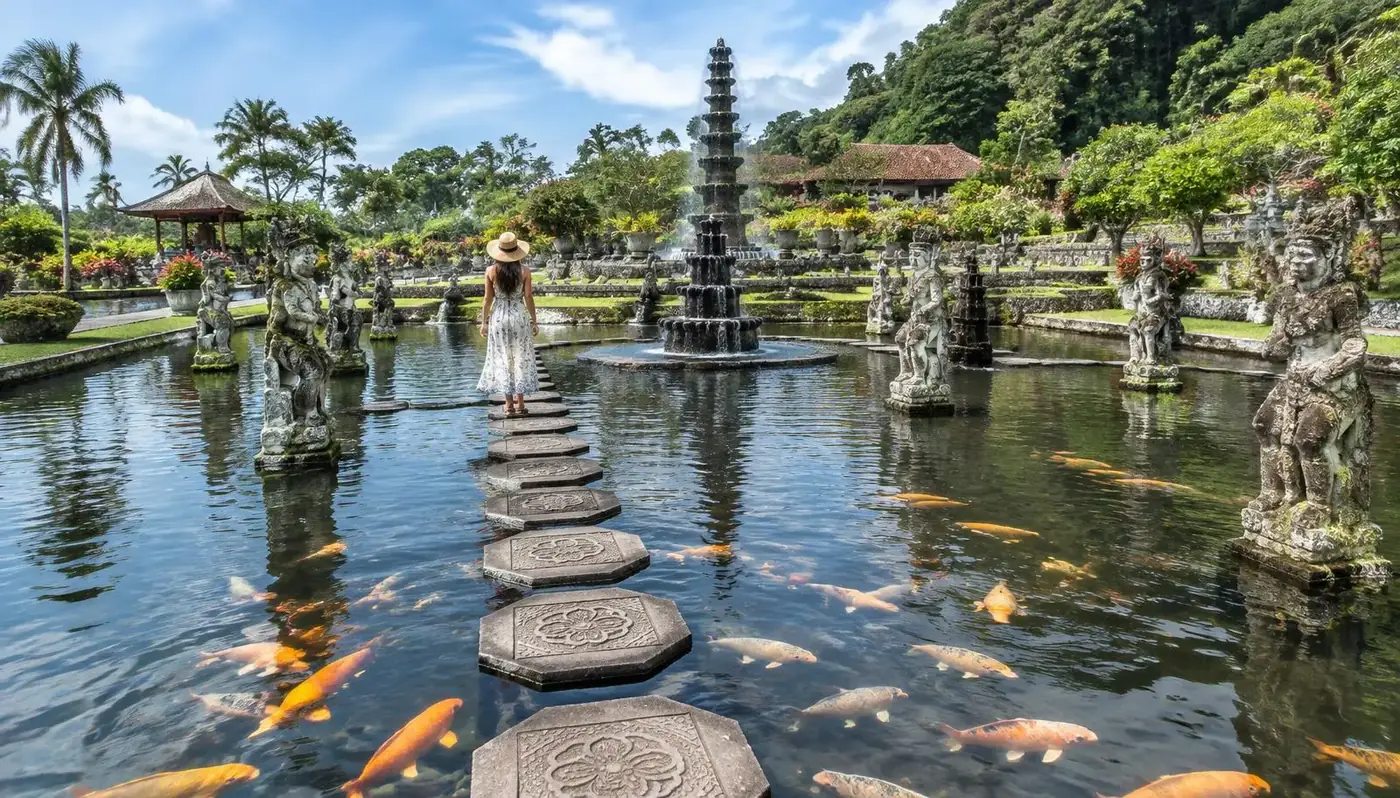
Tirta Gangga is one of East Bali’s best-known sights, but it earns its place on an itinerary. Created as a royal water garden in the twentieth century, it brings together ornamental pools, fountains, stone figures and carefully arranged planting beneath the surrounding hills.
The stepping stones across the koi-filled pool are the famous attraction. They are fun to explore, although queues and busy photo-taking can make progress slow. Watch your footing, give other visitors space and take extra care with children near the water. Wet stone can be slippery.
Do not stop at the first pool. Wander further through the grounds, look at the fountains and find a quieter angle away from the busiest photo spot. Visiting earlier in the day may mean a calmer experience, but you should still expect company at such a popular attraction.
Allow time to enjoy the garden rather than budgeting only for a photograph. Comfortable footwear, drinking water and sun protection will make the visit easier, particularly when the weather turns hot.
The Tirta Gangga driver page is a useful starting point for planning transport. It can fit well with another Karangasem-area stop, but adding Sidemen, Lempuyang and a long beach visit immediately makes the day much more demanding.
Lempuyang: look beyond the Gates of Heaven
The famous Gates of Heaven belong to Pura Penataran Agung Lempuyang, part of the wider Lempuyang temple complex. On a clear day, the view towards Mount Agung is magnificent. It is also one of Bali’s most recognisable photographs, so this is not somewhere to expect solitude.
There is an important detail behind many of those pictures: the mirror-like reflection is usually created with a reflective surface held beneath the camera. There is no large reflecting pool in front of the gates. Knowing that beforehand helps you appreciate the setting without arriving with the wrong expectations.
Photo queues can take a significant amount of time. If the gates picture is your priority, build the day around it and be prepared to adjust other stops. If it is not, decide whether this particular visit suits your interests rather than adding it simply because it is famous.
This is an active religious site. Wear appropriate clothing, use a sarong and sash where required, and follow instructions about access and photography. The wider complex involves more climbing than the familiar gate visit, so clarify what you intend to see.
Explore the Lempuyang transport information, and read the guide to Bali’s temples for more cultural context.
Amed and Tulamben: a different side of Bali’s coast
Continue towards the north-eastern coast and East Bali takes on a different rhythm. Amed refers to a stretch of coastal villages rather than one compact resort centre. Fishing boats rest on dark beaches, bays curve beneath dry hills, and the sea becomes the main attraction.
Snorkelling is possible at several locations around Amed, including Jemeluk, but conditions vary. Calm-looking water does not guarantee an easy swim, and currents, waves and visibility can change. Ask a reputable local operator which location is suitable that day, particularly if you are a beginner or travelling with children.
Tulamben is especially well known for the USAT Liberty wreck. The ship lies close to shore, but that does not make every part of it accessible to casual snorkellers. Much of the experience is associated with scuba diving, while snorkelling views depend on conditions and visibility.
Shore entries can involve rounded stones, uneven ground and waves. Divers should choose an operator appropriate to their certification and experience; newcomers should discuss supervised introductory options rather than assuming they can explore independently.
Never stand on coral, chase marine life or touch the wreck. Follow your guide’s instructions and use well-fitting equipment.
Amed and Tulamben deserve time. For travellers staying in southern Bali, an overnight stay often makes more sense than combining several hours in the sea with a long return drive. Compare coastal styles in the Bali beaches guide before choosing your base.
Candidasa and Padang Bai: pause beside the sea
Candidasa makes an appealing pause on the eastern coastal road, with places to eat overlooking the water and a quieter atmosphere than Bali’s busiest southern resorts. It is worth knowing that the shoreline is not one continuous broad sandy beach. Seawalls and coastal protection structures shape parts of the waterfront.
Come for a relaxed lunch, sea views and a slower stop between inland sights. If a proper beach afternoon is important to you, discuss suitable nearby options rather than assuming every waterfront property has easy swimming access.
Padang Bai has a different personality. It is a working port, with ferries and fast boats serving onward journeys, as well as places to stay and eat. The harbour can be busy, so distinguish between the transport hub and the nearby bays when planning your visit.
Blue Lagoon is one of the area’s familiar snorkelling spots. Its appeal depends on the day’s sea conditions, and there can be waves and currents despite the sheltered-looking setting. Use local advice, choose a responsible operator and do not treat snorkelling as guaranteed in poor weather.
The Blue Lagoon snorkelling guide offers more planning context. If you are combining a sea activity with inland sightseeing, discuss your route through the Padang Bai driver page, leaving room to rinse off, change and have lunch.
Build a route that leaves room to enjoy it
The biggest East Bali planning mistake is trying to visit everything in one day. Places that look close on a map can be separated by winding roads, village traffic, steep approaches and slow-moving vehicles. Your starting point matters just as much as your list of attractions.
From southern resort areas, allow for a substantial journey before the sightseeing begins. Travellers starting with a private driver from Ubud may find some inland combinations more convenient, but East Bali is still not a quick hop between every stop. Ask for a realistic estimate based on your accommodation, departure time and chosen route.
For a countryside-focused day, Sidemen and Tirta Gangga can form a satisfying core, with lunch and scenic pauses along the way. Keep anything extra optional.
For a temple-and-garden day, prioritise Lempuyang and Tirta Gangga. The photo queue at Lempuyang is the unpredictable element, so avoid committing to a tightly timed activity afterwards.
For a coastal day, choose Padang Bai snorkelling and a relaxed stop around Candidasa rather than adding distant Amed. If Amed or Tulamben is the main reason for travelling east, consider staying overnight and exploring nearby places the following day.
These are starting points, not fixed promises. Weather, religious ceremonies, access arrangements and your own energy levels should all help shape the final plan. The best itinerary is one you can enjoy, not merely complete.
Practical details that make the day smoother
Leave early if your route involves a long transfer, but balance that against a sensible night’s sleep. A sunrise start is less appealing when everyone is exhausted by lunchtime. Let Gadink know if you are travelling with young children, older relatives or anyone who needs to limit walking or steps.
Pack drinking water, sun protection, comfortable shoes and a light rain layer. Add swimwear, a towel and dry clothes if you plan to go into the sea. A waterproof pouch can be useful, but do not rely on it to protect valuables during every activity.
Carry some cash for small purchases and places where card payment may not be available. Entrance charges, parking, local transport arrangements and activity fees can change. Before confirming your trip, ask what the driving arrangement includes and which expenses you will pay separately.
At temples, follow posted guidance and local advice. Do not enter restricted areas, interrupt ceremonies or climb on structures for photographs. Around villages and fields, ask before photographing people closely, especially during religious activities.
Rain can affect walking surfaces, mountain views and sea conditions. Keep one or two stops flexible rather than allowing a cloudy forecast to spoil the whole day. The first-time Bali travel tips are useful preparation, even if this is not your first visit.
Message Gadink on WhatsApp and plan your East Bali escape
East Bali rewards a little planning and a willingness to slow down. You might want the royal gardens and mountain views, a quiet walk through Sidemen or a coastal stay with time to snorkel. You do not have to choose every famous attraction to have a brilliant trip.
Message Gadink on WhatsApp through Exciting Bali Tour to discuss your ideas. Share your accommodation location, preferred date, group size and the places you most want to see. Mention any walking limitations, children’s needs or planned water activities so the route can reflect how you actually like to travel.
You can meet Gadink before getting in touch, or explore the Bali highlight tour if East Bali will be part of a longer island adventure.
Ask about realistic journey times, what is included and whether your wish list suits a day trip or an overnight stay. Then leave space for the best part: discovering the gardens, villages and coastal views between the headline sights.